Cass (they/them) is a folk witch in Dorset, England. They have been looking into spirituality since 2020 and have been devoted to folk magic from 2021 until now. Cass was raised with stories of Greek myths and your average British nursery rhymes and stories like Jack and the Beanstalk.
The fundamental tenant within Cass’ practice as a folk witch is using what you have on hand. Grabbing the nearest flower, a coin, some thread, or scissors, and getting to work is something they pride themselves on. In their practice they shared with me that they rarely order items from online stores or really buy anything intentionally for their craft. They share that we should know everything we need to practice folk witchcraft is around us and, in the land, where we stay.
“They are old, and they are wise.”
Some of the most influential spirits in Cass’ practice are the spirits of the valley in which they stay. The spirits of rivers, hills, fields and trees are important pillars in the practice of folk magic to them. When needing inspiration or wisdom, Cass goes to the spirits of trees, the first of Gods, and asks for their wisdom. They share that we should not be afraid of older spirits as they have seen it all; life grow, buildings constructed, and even wars fought. Although, keep in mind to be respectful of them.
Dorset folk magic is based a lot on farming and the agricultural landscape. Many charms in Dorset reference farming, fertility of land, and curing lame horses. However, if you go closer to the coast you will find more charms relating to protection at sea and getting a good catch of fish. The seasonal cycle as well is important to the Dorset folk witch, as many of the practices are based in agriculture like previously stated. Winter seems to be a time of pause and passivity (learning into the more Roman side of their practice at this time), and in the height of summer, the land spirits are more active and prominent and play a large role in the craft (i.e. wortcunning).
Cass uses the title of ‘Folk Witch’ to refer to their practices. This is because to them there isn’t much of a difference between folk magic and witchcraft in their generation. However, their Grandparents wouldn’t say what they do is witchcraft, or even magic of any kind, but rather just “the things we do”. To them, all folk magic is witchcraft, but not all witchcraft is folk magic.
One of the most memorable charms that Cass performed as a folk witch was using a coin to rub an afflicted body part while praying and sticking it in a church wall to transfer pain. We see many different types of transference magic throughout England, and other cultures practices, often transferring the illness or ailment to a long-standing object like a boulder or wall, or into water and then transferred to an enemy.
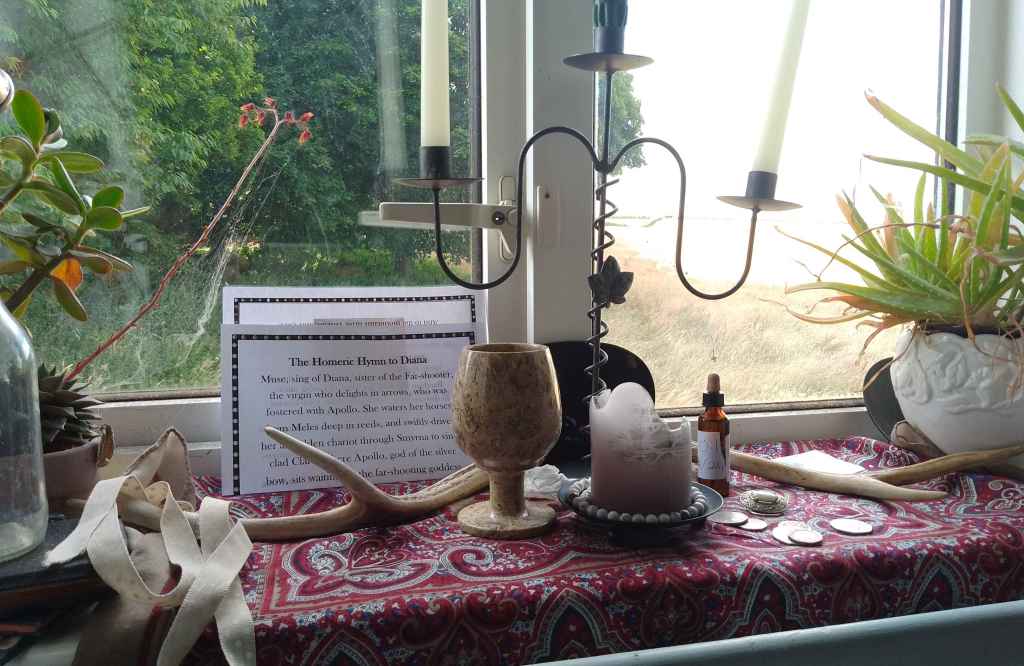
Combining Roman religion and Dorset folk magic has proved difficult sometimes for Cass as Roman religion was very temple-based while folk magic is land-based. There is a push and pull between sitting praying to Diana in a temple-like environment, and being out in the land foraging, crafting, etc. It can be challenging to overcome but they are finding a good balance.
The role of a folk practitioner in the community is something Cass wanted to share some thoughts on. Within communities there was a large amount of common & shared knowledge of charms for fertility, and different ways of doing things, however there would have likely been a Cunning person specialising in some more specific charms (e.g. removing curses). Nowadays it seems that there tends to be a specific person who learns these practices through research as opposed to community-based wisdom. People don’t seem to search out for practitioners like Cunning folk anymore unless in a great time of need and desperation (as a last resort).
Cass leaves us with some wisdom for those reading – listen to your gut. Your gut is probably right even if your conscious mind doesn’t think it is. Furthermore, don’t be afraid to use what is around you. You don’t need flowery incantations or long prayers; you can talk and use common language and leave simple offerings of rocks and flowers. That is the foundation of folk magic and the worst that can happen is nothing.
 Eòlas air Ailig